

Share This Article
Explore 10 remarkable monastic sanctuaries that exude tranquility, culture, and spiritual wisdom.
From architectural marvels to serene retreats, these monasteries offer profound insights into the essence of Buddhism.
1. Wat Pho, Bangkok
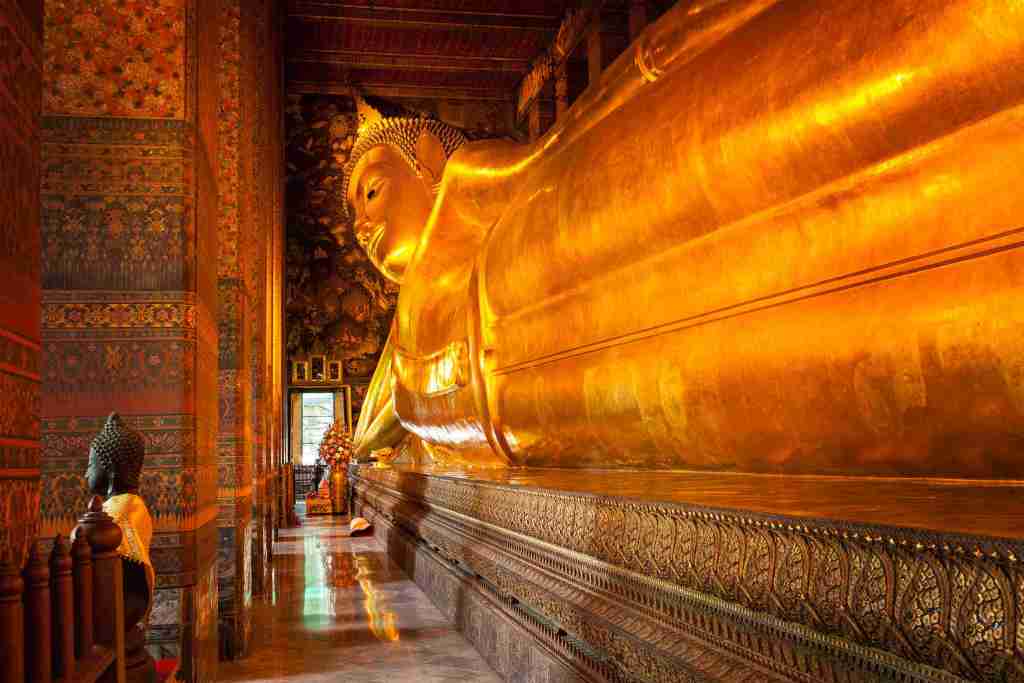
Location: 2 Sanam Chai Rd, Phra Borom Maha Ratchawang, Phra Nakhon, Bangkok 10200, Thailand
Officially known as Wat Phra Chetuphon Wimon Mangkhalaram Rajwaramahawihan, this temple takes pride in its place among the six temples in Thailand, which are categorized as top-tier royal temples. Its history intertwines with that of King Rama I, who undertook a comprehensive reconstruction of the temple complex, making it his primary spiritual sanctuary and the final resting place for a portion of his remains. Subsequently, King Rama III spearheaded substantial expansions and renovations. Within the temple’s precincts, you’ll discover Thailand’s most extensive assembly of Buddha images, among which is a remarkable 46-meter-long reclining Buddha.
2. Wat Rong Khun, Chiang Rai

Location: Pa O Don Chai, Mueang Chiang Rai District, Chiang Rai 57000, Thailand
Wat Rong Khun, famously known as the White Temple, stands as an iconic Buddhist sanctuary situated in the Mueang District of Chiang Rai Province, Thailand. This remarkable temple, nestled just outside Chiang Rai town, beckons both Thai nationals and international tourists, establishing itself as one of Chiang Rai’s most frequented landmarks. The visionary behind the White Temple is none other than the revered national artist Chalermchai Kositpipat, who conceived, constructed, and opened this enchanting edifice to the public back in 1997.
At its core, the temple’s structure is underpinned by a simple concrete framework crowned with a wooden roof. While its distant visage may evoke the impression of porcelain’s glistening allure, a closer examination reveals that the mesmerizing effect is achieved through an ingenious fusion of whitewash and translucent mirror fragments. The external facades are adorned with a coating of white plaster, interspersed with delicate glass inlays, creating a truly captivating spectacle.
3. Wat Phra Singh, Chiang Mai
Location: 2 Sam Lan Rd, Phra Sing, Mueang Chiang Mai District, Chiang Mai 50280, Thailand
Wat Phra Singh, nestled in the heart of Chiang Mai in northern Thailand, holds the esteemed title of a Royal temple of the first grade, a recognition bestowed upon it by King Ananda Mahidol (Rama VIII) in 1935.
This sacred sanctuary is strategically located in the western sector of Chiang Mai’s ancient city center, ensconced within the protective embrace of city walls and a moat. Visitors are welcomed at its principal entrance by vigilant guardians in the form of majestic Singhs (lions). The temple’s Wihan Lai Kham is home to Phra Phutthasihing, Chiang Mai’s most sacred, Chiang Sean-style Buddha image.
Wat Phra Singh serves as the culmination point at the terminus of Rachadamnoen Road, the primary thoroughfare of Chiang Mai, extending eastward from the temple to Thapae Gate and eventually leading to the serene waters of the Ping River.
4. Wat Phra Kaew, Bangkok
Location: Na Phra Lan Rd, Phra Borom Maha Ratchawang, Phra Nakhon, Bangkok 10200, Thailand
Wat Phra Kaew, famously known as the Temple of the Emerald Buddha or Wat Phra Si Rattana Satsadaram in official terms, holds a position of utmost reverence in Thailand’s Buddhist heritage. Situated within the Grand Palace’s historical heart in Bangkok, this sacred complex encompasses various structures. Its primary purpose is to enshrine the venerated Emerald Buddha statue, considered the nation’s protective symbol.
The temple’s construction commenced in 1784 under the directives of King Rama I, the inaugural ruler of the Chakri dynasty. Subsequently, each successive monarch actively engaged in augmenting, renovating, and adorning the temple throughout their reigns. This practice serves as both a religious merit-making gesture and a means of glorifying the dynasty. Notably, numerous significant state and royal ceremonies are conducted at the temple annually, personally overseen by the reigning monarch and attended by government dignitaries.
5. Wat Suthat, Bangkok
Location: 146 Bamrung Mueang Rd, Wat Ratchabophit, Phra Nakhon, Bangkok 10200, Thailand
Wat Suthat Thepwararam Ratchaworamahawihan, situated in Bangkok, Thailand, is a distinguished Buddhist temple. Classified as a royal temple of the highest grade, it is one of the ten prestigious temples in Bangkok, part of a total of 23 across Thailand. Its inception dates back to 1807, when construction was initiated by King Rama I.
Originally named “Wat Maha Sutthawat,” it was nestled within a lush combretum grove. The subsequent embellishments and intricate woodwork, including the elaborately carved wooden doors, were contributed by King Rama II. However, it wasn’t until the reign of King Rama III in 1847 that the temple reached its completion.
At the heart of this temple lies the revered Buddha image, Phra Sri Sakyamuni, which was relocated from Sukhothai Province. Additionally, the lower terrace of the base is adorned with 28 Chinese pagodas, symbolizing the 28 Buddhas who graced the Earth. Further spiritual treasures within Wat Suthat encompass Phra Buddha Trilokachet in the Ubosot, or ordination hall, and Phra Buddha Setthamuni in the Sala kan parian, the meeting hall. These sacred elements collectively embody the profound cultural and spiritual significance of this temple.
6. Wat Arun, Bangkok
Location: 158 Thanon Wang Doem, Wat Arun, Bangkok Yai, Bangkok 10600, Thailand
Wat Arun Ratchawararam Ratchawaramahawihan, commonly known as Wat Arun, is a renowned Buddhist temple nestled in the Bangkok Yai district of Bangkok, Thailand. This sacred site graces the Thonburi area, residing gracefully on the western bank of the majestic Chao Phraya River. Its name, Wat Arun, pays homage to the Hindu deity Aruṇa, often symbolized as the radiant beams of the ascending sun.
Wat Arun stands as one of Thailand’s most iconic landmarks, and although its history dates back to at least the 17th century, its iconic prang, or spire, was intricately crafted during the early 19th century, under the patronage of Rama II and Rama III, adding to its timeless allure.
7. Wat Phu Tok, Bueng Kan
Location: Na Saeng, Si Wilai District, Bueng Kan 38220, Thailand
Wat Jetiyakhiri is its formal title, though most know it as Wat Phu Tok, where “Phu Tok” signifies the local Isan moniker for the mountain, with “Wat” signifying temple.
Due to its rugged, secluded terrain, the mountain has always been a haven for wildlife, including potentially hazardous snakes. This, paradoxically, renders it an enticing locale for meditation. Its serenity, connection to nature, remote ambiance, and the inherent challenge of confronting danger are all elements that beckon seekers of inner peace.
The visionary monk Luang Pu Juan established this temple and initiated the construction of a network of wooden staircases, ladders, and pathways that span the mountain’s expanse, interlinking various shrines and meditation spots. Over time, the monastery evolved to encompass seven tiers, symbolizing the seven stages of Buddhist meditation.
8. Wat Phra Dhammakaya, Pathum Thani
Location: 23 Moo 7 Khlong Sam, Khlong Luang District, Pathum Thani 12120, Thailand
Wat Phra Dhammakaya, situated in the Pathum Thani province just north of bustling Bangkok, Thailand, was established in 1970 under the guidance of maechi (nun) Chandra Khonnokyoong and Luang Por Dhammajayo.
This temple shines as a prominent and rapidly expanding institution within the Dhammakaya tradition, renowned for its teachings in Dhammakaya meditation (Vijja Dhammakaya). The roots of this tradition trace back to the early 20th century, initiated by the esteemed meditation master Luang Pu Sodh Candasaro.
Wat Phra Dhammakaya is a distinguished member of the Mahā Nikāya fraternity and is legally represented by the Dhammakaya Foundation. Its mission is to infuse traditional Buddhist principles into contemporary society, employing modern technology and innovative marketing approaches. While the temple has encountered controversy and government scrutiny, it stands as a significant influencer in Thai Buddhism, often regarded as “the face of modern Thai Buddhism” by theologian Edward Irons.
9. Wat Sriboonruang, Chiang Rai
Location: Moo 3 Singhaclai Rd, Wiang Subdistrict, Mueang District, Chiang Rai 57000, Thailand
Wat Sriboonruang, located along Singhaklai Road, shares its route with the previously mentioned temples. This ancient sanctuary, with its origins dating back to around 1439 A.D., had fallen into disrepair and abandonment over time. Its revival came when Khum Chao Luang transformed it into Damrongratsongkroh School. This transformation involved the relocation of the principal Buddha image and other sacred artifacts from Wat Chiang Man, which was once situated in Khum Luang.
As of February 1, 1946, the temple was officially granted Wisung Khama Sima status, meaning it received official recognition as a valid temple with legal entity status. Today, visitors are welcome during regular hours without any admission fees. Within its premises, you’ll discover the enchanting Lanna-style architectural wonders, comprising a chapel, teaching hall, monk’s quarters, refectory, belfry, and pavilion.
10. Wat Tham Suea, Krabi

Location: 35, Krabi Noi, Mueang Krabi District, Krabi 81000, Thailand
The Tiger Cave Temple, locally known as Wat Tham Suea, stands as a revered Buddhist sanctuary in Krabi. This sacred place is renowned for several distinguishing features, including the presence of tiger paw prints within the cave, towering Buddha statues, and the physically demanding ascent of steep stairs leading to the summit.
The origins of this temple trace back to the year 1975, corresponding to the Buddhist Era 2518. It was during this time that a Vipassana monk named Jumnean Seelasettho, also known as Luang Po Jumnean, embarked on a meditative retreat within the cave’s confines. In a remarkable turn of events during his meditation, he witnessed tigers wandering around the cave’s vicinity. This extraordinary encounter played a pivotal role in the temple’s nomenclature, leading to its christening as Wat Tham Suea. Another local legend perpetuates the tale of a colossal tiger that once inhabited and roamed the cave’s interior. This legend finds support in the discovery of tiger paw imprints adorning the cave walls, as well as the resemblance of the cave’s formation to a tiger’s paw.
In Thailand’s monasteries, the influence of Buddhism permeates every aspect of life. Whether you seek spiritual insight or architectural marvels, these sacred sites offer a profound connection to the country’s rich cultural tapestry. Embark on a journey of enlightenment and serenity as you explore these 10 inspiring monasteries.