

Share This Article
Thai culture is a vibrant tapestry where food plays a profound role, especially in religious and community rituals. From the serene morning alms-giving (Tak Bat) to the exuberant celebrations of Songkran and Loy Krathong, food transcends sustenance—it becomes a spiritual connector, a symbol of gratitude, and a means to foster unity.
Let’s dive into the fascinating cultural significance of Thai offerings and feasts that blend tradition, spirituality, and community spirit.
1. Tak Bat: The Daily Ritual of Generosity


One of Thailand’s most enduring traditions is the practice of alms-giving (Tak Bat), where laypeople present food to monks in the quiet stillness of the morning.
- Spiritual Bond: Tak Bat reflects the interdependence of the lay community and monastic order. Monks rely on these offerings for sustenance, while givers earn merit and practice generosity.
- Mindfulness in Action: This ritual encourages participants to pause, reflect, and engage in silent prayers or meditation while preparing and presenting their offerings.
- Community Harmony: It’s a unifying experience, bringing together people from all walks of life with a shared purpose of doing good.
This tradition emphasizes not just giving but also the sincerity and care that go into each offering, often comprising high-quality rice, fruits, and sweets. Freshly prepared home-cooked meals are also common in some areas, with some participants adding personal touches as a way to demonstrate thoughtfulness and compassion.
2. Songkran: A Festival of Renewal and Feasting

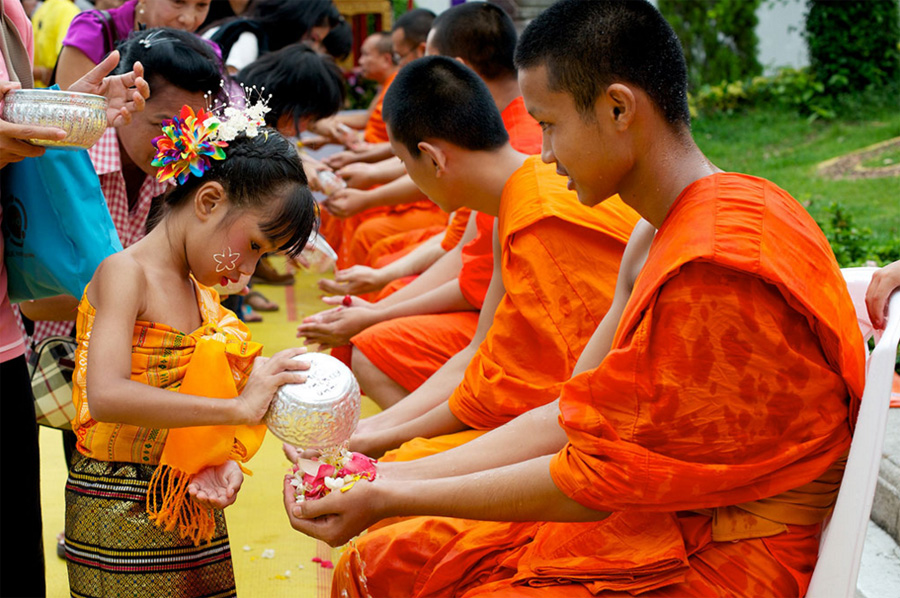
The Thai New Year, Songkran, is as much about spiritual cleansing as it is about joyous celebration.
- Offerings with Purpose: Families gather at temples to present food to monks, symbolising respect and gratitude. Traditional offerings include sticky rice, Thai desserts like Khanom tom, and seasonal tropical fruits, which represent abundance.
- Ritual Purity: Bathing Buddha statues and performing merit-making activities are integral parts of the festival, which symbolise the washing away of past misdeeds.
- Family First: Songkran is also a time for reunions, honouring elders, and strengthening family bonds over shared meals.
This festival beautifully blends fun with reverence, highlighting the deep connection between food and familial ties. While water play and public festivities are the most well-known aspects of Songkran, the quieter acts of offering food and merit-making are equally significant.
3. Loy Krathong: Floating Offerings of Hope and Forgiveness
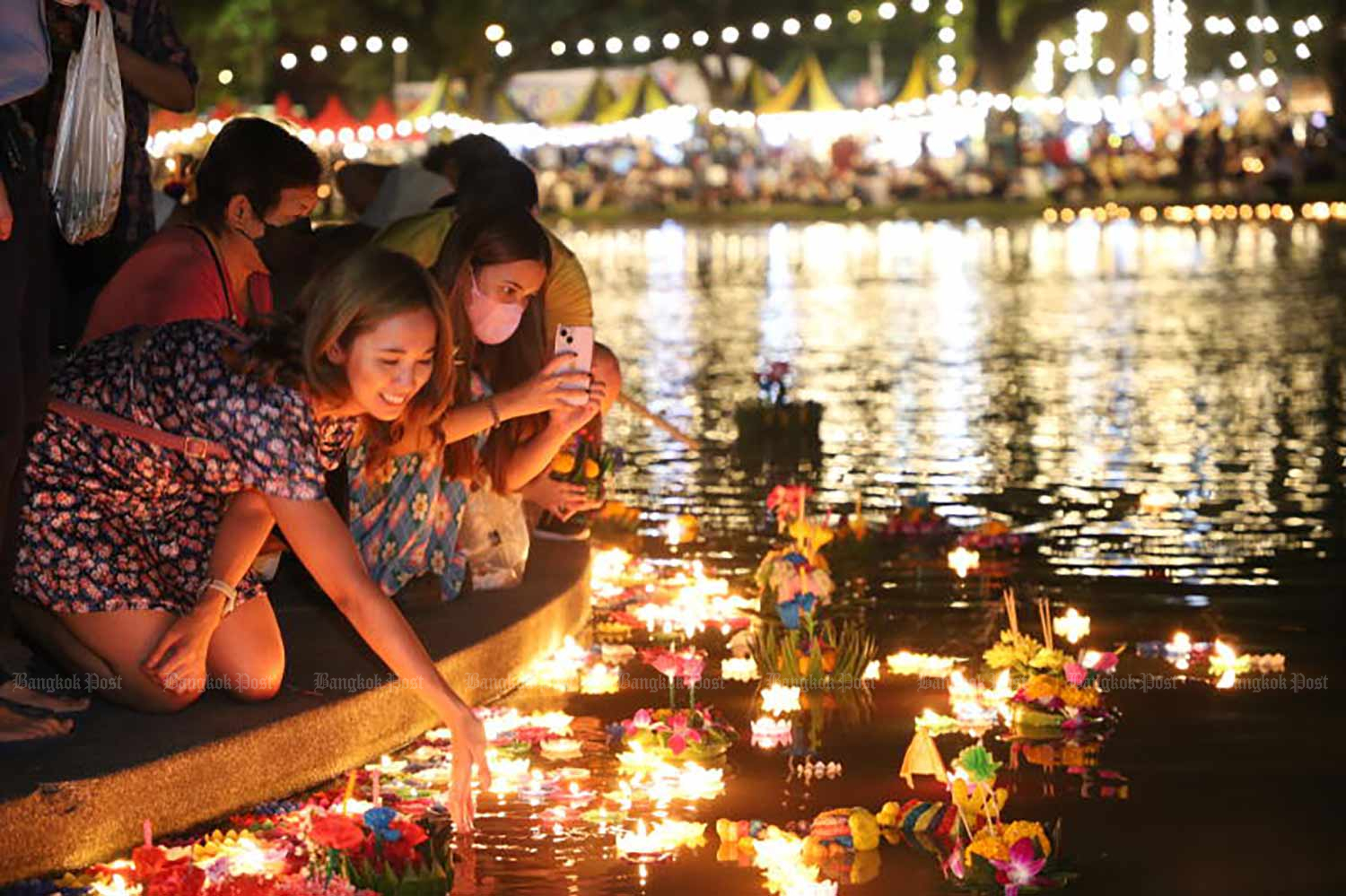
The ethereal festival of Loy Krathong involves floating banana-leaf lanterns (krathongs) on waterways, accompanied by offerings of flowers, candles, and incense.
- Symbolic Release: Releasing a krathong into the water signifies letting go of past grievances and starting anew.
- Respect for Nature: Offerings also serve as an apology to the water goddess Phra Mae Khongkha (the Thai name for the Hindu goddess Ganga), reflecting the Thai values of gratitude and environmental awareness. In recent years, efforts to use biodegradable materials in krathongs have increased to reduce environmental impact.
- A Feast for the Soul: While the focus is on spiritual renewal, food offerings during this festival echo themes of reverence and communal sharing. Thais sometimes enjoy traditional Thai sweets like thong yip and thong yod, as they symbolise wealth and prosperity.
The festival’s luminous displays and heartfelt traditions make it one of Thailand’s most poetic celebrations.
4. A Cultural Mosaic: Blending Influences
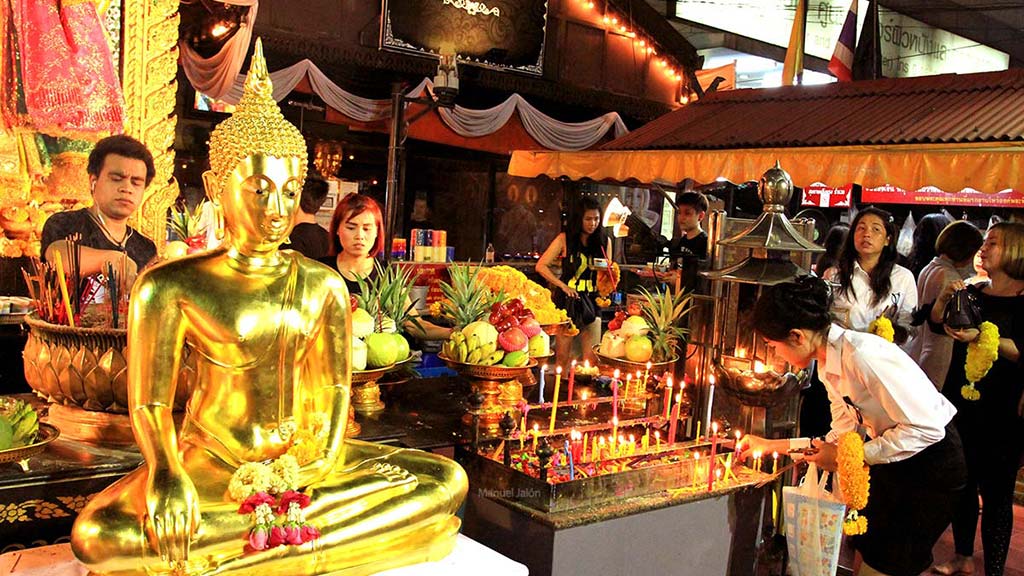
Thai offerings and feasts owe much to Buddhism, but their significance is enriched by the region’s historical ties to Hindu traditions. For example:
- Ritual Similarities: Rituals in Thai festivals often mirror those found in Indian celebrations, highlighting shared values of respect, gratitude, and renewal.
- Symbolic Foods: Many Thai desserts, like khanom chan (layered dessert), echo symbolic meanings found in Hindu traditions, where layers and colours represent progress and growth.
This syncretism has created unique practices that are deeply Thai yet universally resonant. This blend of influences is most evident in ceremonial feasts (called ‘pitee’), where specific foods are chosen for their symbolic meaning in Thai, Hindu, and even Chinese traditions.
A Feast of the Heart and Spirit
In Thailand, food is far more than sustenance—it’s a medium for expressing faith, fostering community, and honouring traditions. Whether through the quiet grace of Tak Bat or the joyful exuberance of Songkran and Loy Krathong, Thai offerings and feasts reflect a profound cultural identity that values generosity, gratitude, and unity.
As you explore these traditions, you’ll not only taste Thailand’s culinary delights but also savour its spiritual and cultural depth. From the simplicity of morning alms to the grandeur of festival feasts, each ritual invites us to reflect on the bonds that connect us all.
Similar read:
- Spirit Houses: Understanding Thailand’s Unique Tradition
- The Jae Festival in Thailand: A Feast for the Senses and Spirit
- Thailand’s Ghost Festival: A Look at Loei’s Unique Phi Ta Khon Celebration
Sources: Baanaksorn, Travel Thailand, Feast Thailand, Thai Science