

Share This Article
Thailand, a country deeply rooted in Buddhist traditions, has long viewed its monkhood as a moral and spiritual compass. Yet, the intersection of religion and politics has sparked intense debate over the role of Buddhist monks in shaping the nation’s political discourse. Despite a cultural taboo discouraging direct political participation, some monks have emerged as powerful voices in Thailand’s turbulent political landscape.
The Role of Monks in Thai Society
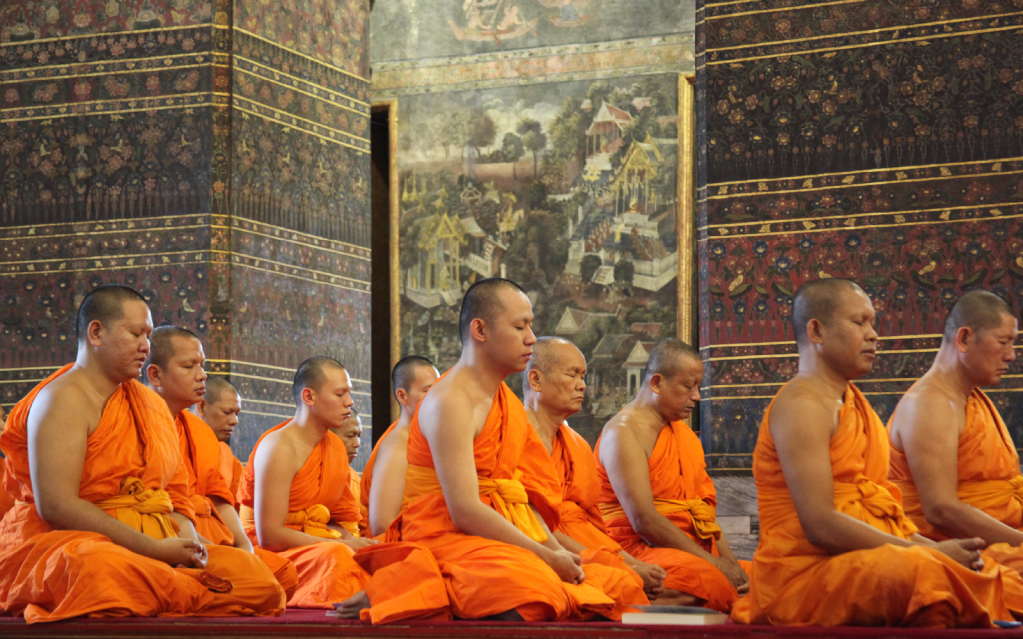
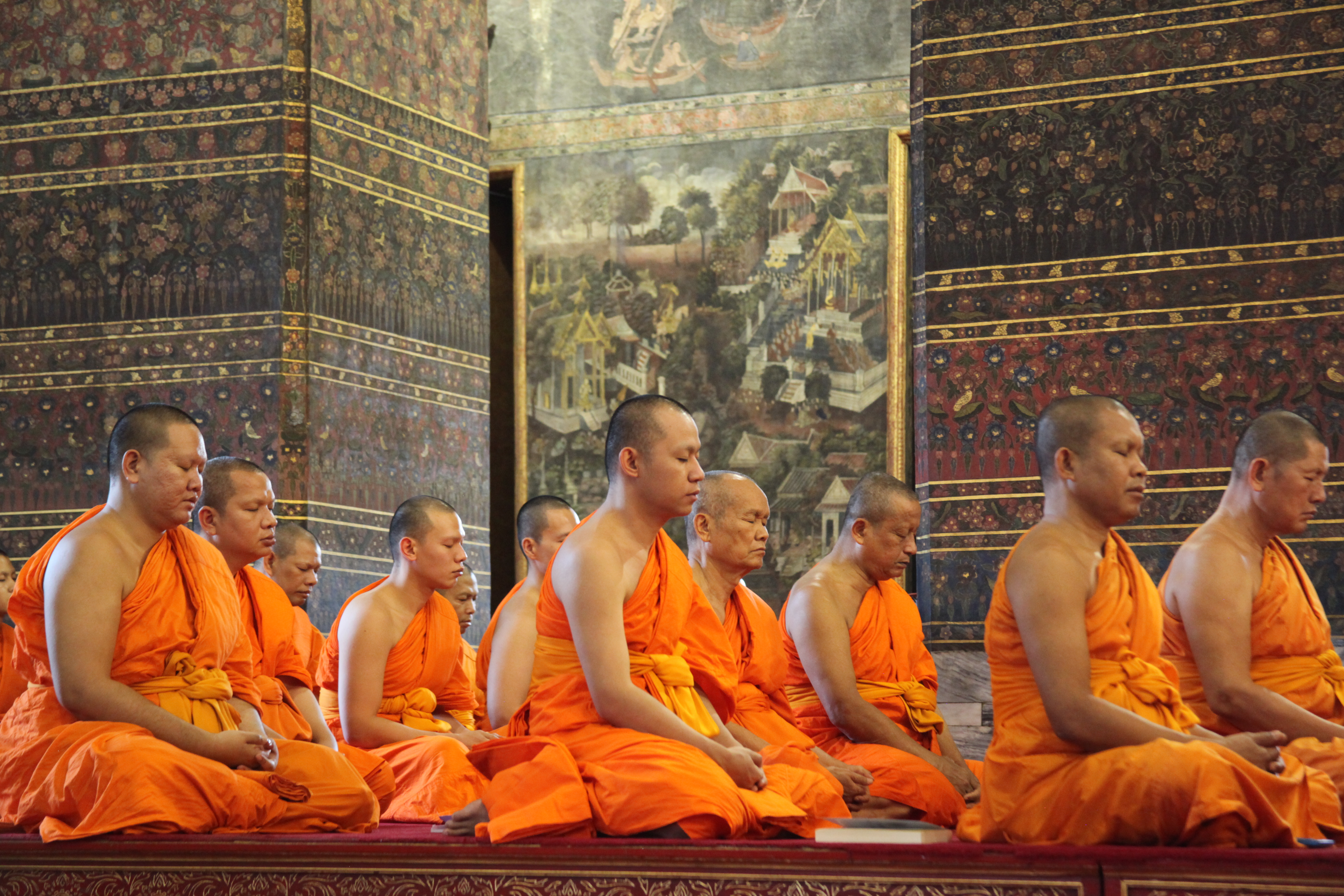
Monks in Thailand are revered as spiritual leaders and moral guides. They are expected to remain apolitical, embodying detachment from worldly affairs. This traditional stance, however, has evolved as political crises, economic inequalities, and social justice issues increasingly demand moral intervention. The line between religious guidance and political activism has blurred, leading to the rise of politically influential monks.
Influential Monks in Thai Politics


- Phra Buddha Isara
A prominent figure in Thailand’s political protests, Phra Buddha Isara gained national attention during the 2014 anti-government demonstrations. Known for his ultra-conservative views, he advocated for sweeping reforms to protect Thailand’s monarchy and strengthen its moral fabric. Critics, however, questioned whether his activism was consistent with Buddhist principles of detachment.
- Phra Phaisal Visalo
Widely regarded as a proponent of peace and democracy, Phra Phaisal Visalo has been a vocal advocate for reconciliation amid Thailand’s political turmoil. Through his writings and speeches, he has emphasized the importance of dialogue and compassion in resolving political conflicts. - Monks Supporting Pro-Democracy Movements
The pro-democracy protests of recent years have witnessed the participation of younger, progressive monks. These monks have joined demonstrations advocating for human rights, political reform, and the separation of religion from state control. Their involvement has drawn both praise for their courage and criticism for breaching traditional Buddhist precepts.
The Ethical Dilemma
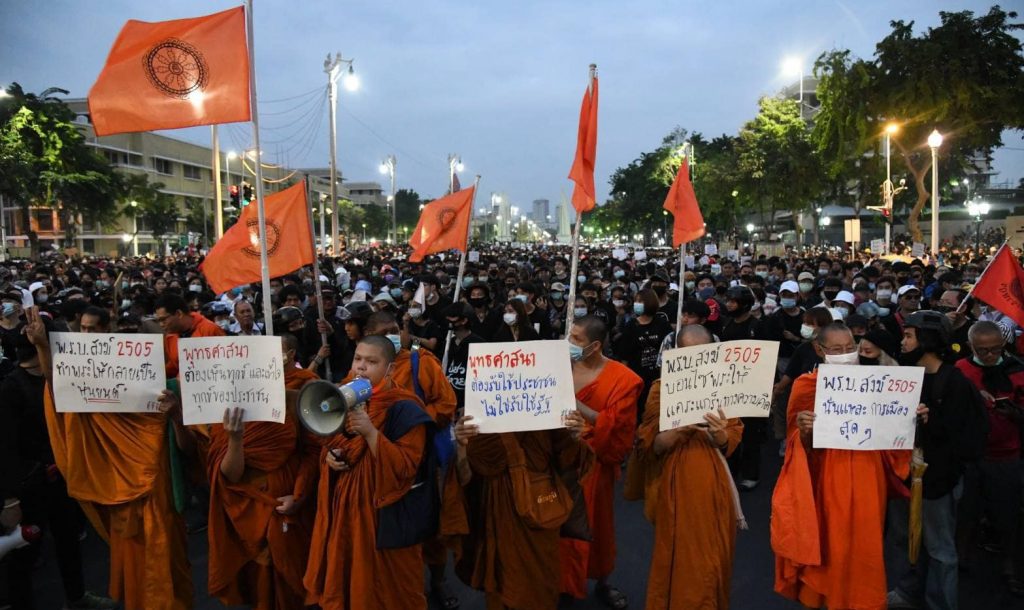
The participation of monks in politics raises ethical questions. Should monks, bound by the Vinaya (Buddhist monastic code), involve themselves in worldly matters? On one hand, their moral authority lends weight to causes advocating justice and equality. On the other, critics argue that political activism risks undermining the spiritual sanctity and neutrality of the Sangha (monastic community).
State Responses and Controversy

Thailand’s government has often sought to curb monk activism. In 2020, the Sangha Supreme Council issued directives prohibiting monks from joining protests. Such measures reflect concerns over the politicization of religion but have also been criticized as an infringement on free speech and democratic rights.
Why Monks Enter the Political Arena

The involvement of monks in politics is often driven by a sense of moral obligation to address pressing social and economic issues. Monks like Phra Phaisal view politics not as a pursuit of power but as a platform for fostering compassion, justice, and ethical governance.
The Path Forward: Balancing Tradition and Modernity
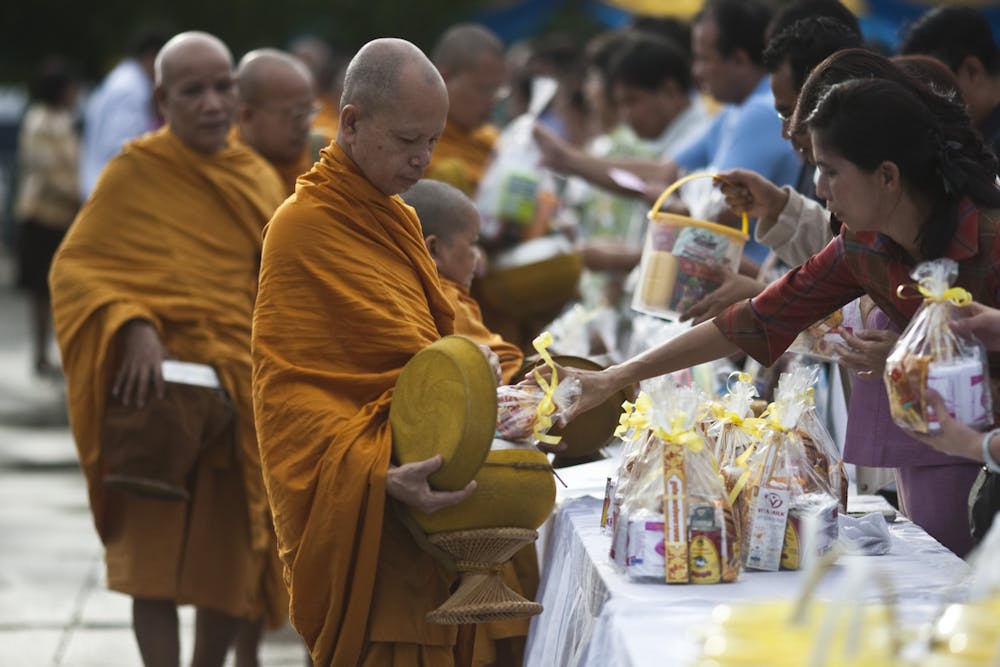
As Thailand navigates its political challenges, the role of monks in politics remains a contentious issue. While their involvement can inspire positive change, it also risks politicizing religion. Moving forward, a balanced approach that respects both the spiritual and civic responsibilities of monks could redefine their place in Thai society.
Conclusion
The intersection of Buddhism and politics in Thailand reflects the complexities of modern governance in a deeply traditional society. Influential monks have shown that moral guidance can inspire political change, but their involvement must be carefully navigated to preserve the sanctity of their spiritual role. Thailand’s future will depend on how it reconciles these dual forces of tradition and progress.
Similar read:
- Is This How the World Sees Thailand Today? Apple’s New Ad Raises Questions About Stereotypes
- Thailand’s Olympic Uniform Controversy: A Missed Opportunity for Soft Power?
- Is Thailand Ready to Embrace Its Hidden Adult Industry?
Sources: The Diplomat, ISEAS, New Mandala, Religion@UVM, Reuters, Taylor & Francis Online