

Share This Article
Makha Bucha Day is more than just a date on the Thai calendar; it’s a spiritual symphony that resonates throughout the Land of Smiles. Celebrated on the full moon of the third lunar month, this Buddhist festival is a vibrant tapestry of devotion, history, and community.
Here are some insights into the history and the serene celebration that will take place on 24 February 2024 in Thailand.
1. A Historical Congregation


Makha Bucha Day stands as a pillar of the Buddhist tradition, commemorating a spontaneous and significant gathering that is miraculous and spiritually impactful. The convergence of 1,250 disciples—each an arahant, or enlightened monk, who had attained such enlightenment without any direct teaching from the Buddha—is a testament to the profound magnetism of Buddha’s message and the unity it inspired. These disciples came together, driven by a shared calling, at the Veluvana Vihara, or Bamboo Grove, in Rajagaha (now Rajgir), India.
With no prior planning, the sheer synchronicity of this gathering emphasizes the deep spiritual connection and purpose that the disciples felt, reflecting a remarkable event in the early phase of Buddhism. It is said that all these monks were ordained by the Buddha himself, which further underscores the divine orchestration of this assembly.
During this assembly, Buddha gave the principles of the ‘Ovada Patimokkha’, which encapsulate the essence of his teachings and serve as ethical guidelines for Buddhist conduct. This day, therefore, is a celebration and a powerful reminder of the unity and collective commitment to the path of Dhamma, the cosmic law and order, as taught by the Buddha. Makha Bucha Day thus honours the origins of these teachings and the collective effort of the disciples to uphold and spread the Buddha’s profound insights.
2. The Essence of ‘Ovada Patimokkha’

The Ovada Patimokkha encapsulates the foundational ethos of Buddhism, distilling its vast philosophy into three succinct directives that guide the moral and spiritual life of its followers. Delivered by the Buddha on Makha Bucha Day, these principles form the bedrock of Buddhist ethical conduct.
“To do what is good” encourages the pursuit of virtue and benevolence, fostering actions that promote harmony and well-being. “To cease all evil” is to actively avoid harm and wrongdoing in thought, word, and deed. Lastly, “to cleanse one’s mind” is an inward call, urging adherents to cultivate mental discipline through meditation and mindfulness, striving towards the ultimate liberation of Nirvana.
Essentially, the three tenets of Ovada Patimokkha become a way of life for Buddhists, guiding them towards compassion, wisdom, and inner peace. On Makha Bucha Day, practitioners reaffirm their commitment to these principles through acts of merit-making and contemplation, reflecting on the profound simplicity of the Buddha’s teachings.
3. Almsgiving and Merit-making
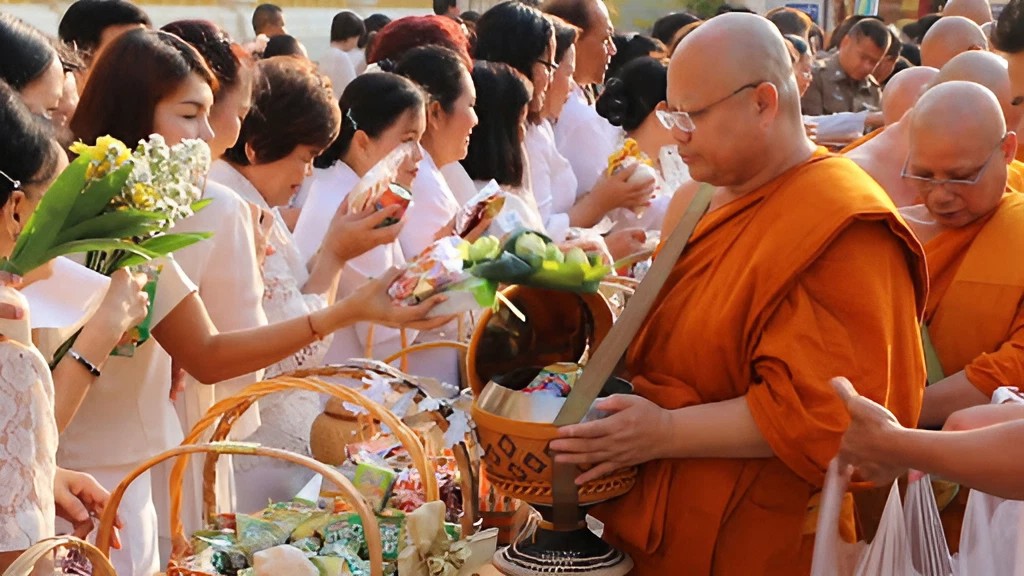
On Makha Bucha Day, the act of almsgiving serves as a profound expression of giving and humility. Thai Buddhists rise at dawn, preparing and gathering food and other offerings, which they present to monks in a ritual that reaffirms their commitment to Buddhist precepts. This tradition of almsgiving is not merely a charitable act; it is deeply embedded in Thai culture as a means of cultivating good karma and spiritual growth. As monks accept these offerings, they provide blessings in return, creating a reciprocal exchange of goodwill and reinforcing the community’s spiritual bonds.
Merit-making extends beyond almsgiving, encompassing various acts of kindness and good deeds. Laypeople engage in various activities, such as releasing captive animals, donating to charitable causes, and participating in temple restoration projects. These deeds are believed to accumulate merit that contributes to a person’s future well-being and spiritual liberation. On this day, the collective pursuit of merit transforms individual acts into a nationwide movement of compassion and mindfulness, reflecting the shared values and religious fervour that ripple through the heart of Thai society.
4. The Wian Tian Ceremony

The Wian Tian ceremony is a serene procession that takes place in the soft glow of candlelight. This is a physical manifestation of devotion and reverence within the Buddhist tradition shown during the main important Buddhist holidays.
During this ceremony, participants circle the temple in a clockwise direction, which aligns with the motion of the sun and underscores the natural order of life as observed in the Buddhist doctrine. As the participants walk, they hold a few items, which are carefully chosen and have a deep significance. The candle represents the light of Buddha’s wisdom that illuminates the world. The incense embodies the purity of practice that purifies the mind, and the lotus flower signifies the blossoming of understanding and enlightenment.
This ritual is not only a personal journey but also a communal one, where the collective energy of the practitioners strengthens the sense of unity and shared faith. The circling of the temple three times reinforces the importance of the Triple Gem—the Buddha, the Dharma, and the Sangha—as the central tenets of the faith that offer refuge and a path to spiritual liberation. Through this meditative walk, participants reflect on these principles, integrating the teachings into their hearts and minds and reaffirming their commitment to the Buddhist way of life. The Wian Tian ceremony is a profound experience that connects the individual’s inner journey to the communal expression of Buddhist values and traditions.
5. Temple Teachings and Reflection

On Makha Bucha Day, temples throughout Thailand become hubs of spiritual learning and introspection. The air resonates with the sound of monks delivering sermons that delve into the life and teachings of the Buddha, offering insights into the path of Dhamma. These teachings are more than just lectures; they are interactive sessions where the community gathers to discuss and interpret the Dhamma, enabling a deeper understanding of the Buddha’s path to enlightenment. Devotees engage actively, asking questions and sharing experiences, in an atmosphere of collective learning that strengthens their faith and practice.
The day’s reflective mood is palpable as individuals participate in meditation sessions, often led by seasoned monks. These sessions are the cornerstone of Makha Bucha observances, as they provide a tranquil environment for individuals to look inward and cleanse their minds of impurities. Meditation is complemented by personal reflection, where devotees contemplate the Buddha’s teachings and assess their own lives through the lens of Buddhist precepts. The serene environment of the temple, combined with the collective energy of fellow practitioners, offers a supportive space for personal and spiritual growth.
6. Alcohol Ban

Thailand has a statewide ban on the sale of alcohol on Makha Bucha Day. This abstention underscores the day’s solemnity and reverence, aligning with the Buddhist precepts that advocate for abstinence from intoxicants as a means to clearer mindfulness and moral discipline. It’s a day when the entire nation collectively turns towards more introspective and spiritual endeavours, reflecting the teachings of the Buddha that emphasize mental clarity and the avoidance of behaviours that cloud the mind and judgment. The prohibition is not just a legal mandate; it’s a cultural expression of respect for one of Thailand’s most sacred days. For visitors and locals alike, the absence of alcohol serves as a powerful reminder of the day’s deeper purpose: to foster inner peace, self-reflection, and community harmony.
Overall
Makha Bucha Day is the personification of serenity, deep respect, and unity, reflecting the profound spiritual essence of Thailand. It’s a day where the air is filled with the harmonious chants of monks, the night illuminated by candlelight processions, and hearts are touched by the pervasive sense of peace. This day offers an extraordinary window into the essence of Thai culture and the Buddhist way of life. Embracing the principles celebrated on Makha Bucha—doing good, refraining from harm, and purifying the mind—can inspire a journey of spiritual and cultural enlightenment. Let the profound observances of Makha Bucha Day encourage you to reflect on its teachings and incorporate them into your daily life, nurturing a connection with the timeless traditions of Thailand.