

Share This Article
Mangroves, the unsung heroes of coastal ecology, are vital to the health of Thailand’s coastal regions. Acting as natural storm barriers, carbon sinks, and rich biodiversity havens, these ecosystems are now under threat from urbanisation, aquaculture, and climate change. However, across Thailand, a wave of innovative conservation and restoration projects is offering hope for these critical environments.
The Frontlines of Conservation
1. The Pred Nai Mangrove Conservation and Development Group


A grassroots initiative in Trat Province, Pred Nai is a beacon of community-led conservation. Starting in the 1980s, villagers mobilised to counter destructive logging and aquaculture practices. Today, they sustainably manage over 1,920 hectares of mangroves, fostering biodiversity recovery, such as the return of crabs, fish, and bird species. The group’s proactive measures include tree planting, crab breeding programs, and a network connecting neighbouring villages to scale up conservation efforts.
2. UNESCO’s SOO Project


The Sustaining Our Oceans (SOO) project focuses on Thailand’s largest mangrove ecosystem. UNESCO has collaborated with local stakeholders to enhance the resilience of mangroves against rising sea levels. The initiative emphasizes sustainable livelihoods, balancing ecological preservation with community welfare.
3. Mangrove Alliance: Restoring Natural Mangroves
This project prioritises large-scale reforestation using native species. Through public-private partnerships, it seeks to rehabilitate degraded mangroves, leveraging innovative mapping and monitoring technologies to ensure long-term sustainability.
4. SEAMEO SPAFA’s Mangrove Conservation Project

With an emphasis on education and awareness, this initiative integrates conservation into school curriculums, fostering a new generation of environmental stewards. The project also supports hands-on activities such as replanting drives and ecological monitoring.
Corporate and Technological Contributions
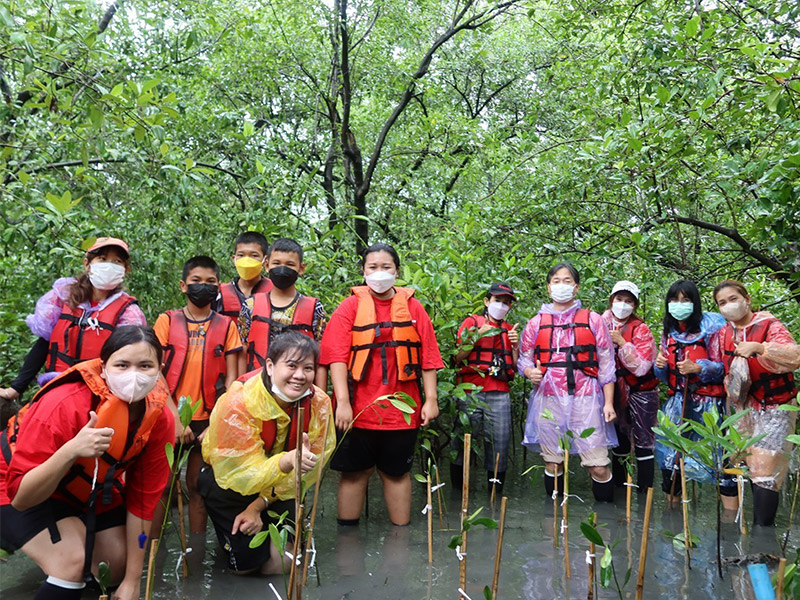
Thailand’s business sector has also stepped up. Canon and Brother International have launched conservation projects focusing on mangrove planting and technology-driven ecological monitoring. Meanwhile, PTTEP’s Mangrove Reforestation Project highlights the role of corporate social responsibility in driving environmental change, emphasising collaboration between industries and local communities.
Similar read: Building a Sustainable Future: 8 Inspiring CSR Initiatives in Thailand
Scaling Up Through Policy and Partnerships

Many of these projects have influenced national policies. For instance, the Pred Nai initiative played a pivotal role in shaping Thailand’s Community Forest Bill, which underscores the power of local management in achieving sustainable forestry practices.
International partnerships, such as those led by RECOFTC, have brought technical expertise and funding to these efforts. They provide a framework for scaling local success to regional levels and foster networks that ensure knowledge sharing and capacity building.
Why It Matters

Mangroves are not just a local resource; they are a global asset in combating climate change. Their ability to sequester carbon is unmatched, making their preservation essential for reducing greenhouse gas emissions. Moreover, they protect communities from extreme weather, safeguarding lives and livelihoods.
What’s Next?
As Thailand continues to lead mangrove conservation, global support will be crucial. By amplifying these efforts, nations and organisations worldwide can help replicate Thailand’s success, ensuring that mangroves thrive for generations to come.
Similar Read
- Thailand’s Coral Reef Restoration Efforts: A Model for Marine Conservation
- Sustainable Agriculture in Action: 8 Farms Shaping the Future
- Wildlife Conservation in Thailand: 8 Projects Making a Difference.
Sources: PTTEP, Canon Thailand, Global Mangrove Alliance, SEAMEO SPAFA, Brother, Equator Initiative, UNESCO