

Share This Article
Thailand’s folklore is filled with supernatural entities, from mischievous tricksters to vengeful spirits. But among the most terrifying is Phi Pop, a malevolent ghost that preys upon human flesh. Unlike the playful or tragic spirits that populate Thai myths, Phi Pop is a relentless predator, haunting villages, possessing its victims, and consuming their internal organs from within. This fearsome legend is particularly prominent in rural northeastern Thailand, where the spirit’s influence continues to shape local beliefs, exorcism rituals, and even legal cases.
But what is the origin of Phi Pop? How has it evolved over time? And why does it continue to strike fear into the hearts of Thai villagers to this day?
Who or What Is Phi Pop?


Phi Pop (ผีปอบ) is often described as a spirit that possesses humans, turning them into ravenous, flesh-eating beings. Unlike other ghosts that haunt places or objects, Phi Pop resides within a living host, feeding off their organs until the person perishes. The spirit then moves on to a new victim, continuing its gruesome cycle.
Phi Pop is often linked to black magic gone wrong. Folklore suggests that sorcerers who abuse dark spells or attempt forbidden rituals can become possessed by Phi Pop. Once infected, they are doomed to an insatiable hunger for raw human entrails. Symptoms of possession include erratic behaviour, sudden aggression, and an insatiable craving for raw meat. In many villages, unexplained deaths are often blamed on the work of Phi Pop.
This spirit is commonly associated with the Isan region of Thailand, where rural communities still conduct elaborate ceremonies to ward off its influence. The legend is so ingrained in local culture that accusations of Phi Pop possession have led to real-life witch hunts, exile, and even murders.
The Origins of Phi Pop: Black Magic and Curses
The origins of Phi Pop are deeply intertwined with Thailand’s history of animism and black magic. Thai folklore is filled with stories of sorcerers and shamans (mor phi) who wield supernatural powers. While many of these shamans use their knowledge for healing and protection, some are believed to dabble in dark arts.
According to legend, a powerful sorcerer once sought eternal life but made a mistake in his ritual. Instead of achieving immortality, his soul was cursed to wander the earth, possessing the living and consuming their insides. This tale serves as both a cautionary warning against the misuse of magic and an explanation for mysterious deaths in rural communities.
Phi Pop’s presence is not only spiritual but also psychological—acting as a societal mechanism to regulate behaviour. Those suspected of being Phi Pop are often individuals who behave erratically, become socially isolated, or act in ways that disrupt community harmony. This leads to collective fear and, in extreme cases, mob justice.
Signs of Phi Pop Possession
Phi Pop possession is said to manifest through a variety of symptoms, including:
- Sudden, extreme aggression or erratic behaviour.
- A deep craving for raw meat, especially animal livers and intestines.
- Weakness and prolonged illness without a medical explanation.
- Aversion to religious objects, particularly Buddha images and sacred water.
- The ability to jump long distances or move unnaturally fast at night.
Because Phi Pop is a spirit that hides within the body, traditional medicine cannot cure its victims. Instead, communities turn to exorcisms and rituals to drive the spirit out.
Exorcising Phi Pop: Rituals and Superstitions

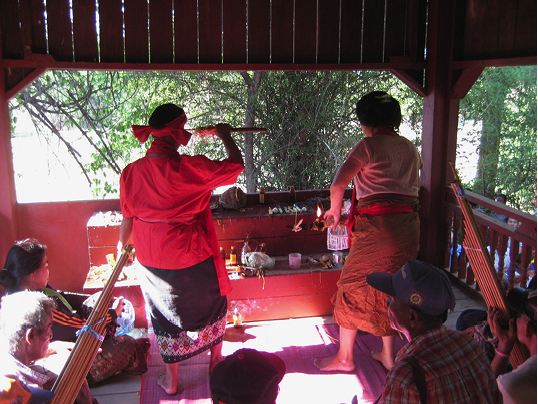
Phi Pop exorcisms are a mix of animist, Buddhist, and traditional folk practices. Shamans (mor phi) play a crucial role in identifying and expelling the spirit. These rituals often involve:
1. Chanting Sacred Spells – Monks or shamans recite ancient incantations to weaken the spirit’s hold on its victim.
2. Use of Sacred Objects – Holy water, blessed talismans, and protective threads are used to prevent the spirit from jumping to another body.
3. Community Gatherings – Entire villages participate in night-long vigils, playing loud music and banging on gongs to scare the spirit away.
4. Mock Funerals – In some extreme cases, a mock funeral is held for the possessed person to trick the spirit into leaving.
5. Banishing the Host – If exorcisms fail, the suspected Phi Pop host may be forced to leave the village.
Though these practices may seem extreme, they reflect a deep-seated fear that Phi Pop can bring not only death but also chaos to close-knit rural communities.
Modern-Day Encounters and Urban Legends

While belief in Phi Pop is strongest in Thailand’s rural areas, stories of encounters persist even in modern times. News reports occasionally surface about entire villages accusing someone of being possessed, leading to violent clashes. In some cases, elderly individuals—particularly women—are suspected of harbouring Phi Pop, resulting in social ostracism or physical harm.
In 2018, a Thai village in Kalasin province made headlines when residents performed a mass ritual to expel Phi Pop after a series of unexplained deaths. Similar incidents have been reported in Laos and Cambodia, suggesting that Phi Pop’s legend extends beyond Thailand.
Phi Pop has also found its way into Thai horror films, cementing its place in pop culture. Movies like Phi Pop 2 and Demonic Beauty explore the terror of possession, bringing the legend to a wider audience.
Cultural and Psychological Analysis: Why Phi Pop Persists
Phi Pop’s resilience in Thai folklore can be attributed to multiple factors:
1. Fear of the Unknown – Unexplained deaths in small villages require an explanation, and Phi Pop provides a supernatural reason for tragedy.
2. Control of Social Deviance – Accusations of Phi Pop possession often target individuals who behave outside community norms, reinforcing traditional values.
3. Ritual as Therapy – Exorcisms and village gatherings serve as communal healing, allowing people to channel their fears into structured rituals.
4. Impact of Animism – Despite Thailand’s strong Buddhist identity, animist beliefs remain deeply ingrained, shaping how people interpret supernatural threats.
Though many modern Thais no longer take the legend literally, the story continues to be a source of fear, entertainment, and cultural identity.
A Legend That Refuses to Die
Phi Pop is more than just a ghost story—it is a reflection of Thailand’s complex relationship with the supernatural, morality, and fear. Whether seen as a cautionary tale against dark magic, a way to explain mysterious deaths, or a cultural mechanism for reinforcing social order, Phi Pop remains one of Thailand’s most enduring and terrifying spirits.
While modernisation has led to a decline in the belief in ghosts, Phi Pop’s legend is unlikely to fade. As long as people fear the unknown, stories of this flesh-eating spectre will continue to haunt the collective imagination.
Similar read:
- Krasue: Thailand’s Floating Phantom and the Fear That Endures
- Mae Nak Phra Khanong: Thailand’s Most Haunting Love Story
- Folklore and Mythology: 7 Stories That Shaped Thai Culture
Sources:
[1] Pop (ghost)
[2] Phi Pop
[3] Hantu Menyeramkan Asal Thailand “Phi Pop”