

Share This Article
When you walk through Thailand’s grand temples and palaces, the intricate woodcarvings tell stories of myth, faith, and Thai heritage. This art form is more than decoration—it’s a legacy of craftsmanship passed down through centuries.
Originating in the Sukhothai and Ayutthaya periods, Thai woodcarving was deeply influenced by Buddhism, as seen in temple and palace designs that use wood to symbolise enlightenment and protection. Each piece is a tangible link to Thailand’s spiritual and cultural identity, capturing the skill and devotion of artisans across generations.
Distinct Regional Styles

Thai woodcarving styles differ by region, yet each carries a deep reverence for nature, the divine, and the spirit. In Chiang Mai and the Lanna region, you’ll find floral and geometric latticework influenced by the lush northern landscape.

Central Thai woodcarving, as seen in Bangkok and Ayutthaya, is more elaborate and incorporates mythological creatures like the Garuda and Naga, which symbolise protection and spiritual guardianship. These carvings are not just beautiful decorations; they’re storytellers bridging the spiritual and material worlds.
Techniques and Materials Used
Artisans rely on traditional tools such as chisels and gouges to create the intricate details in Thai woodcarving. Using durable materials like teak, they carefully chisel layers that create depth, bringing each design to life. Gilding and lacquering techniques are often added as finishing touches, lending a luxurious, shimmering quality to many carvings, especially in central Thailand’s temple art. This combination of craftsmanship and embellishment creates a lasting impact, immersing viewers in the culture’s spiritual essence.
Notable Sites and Woodcarving Masterpieces to Visit
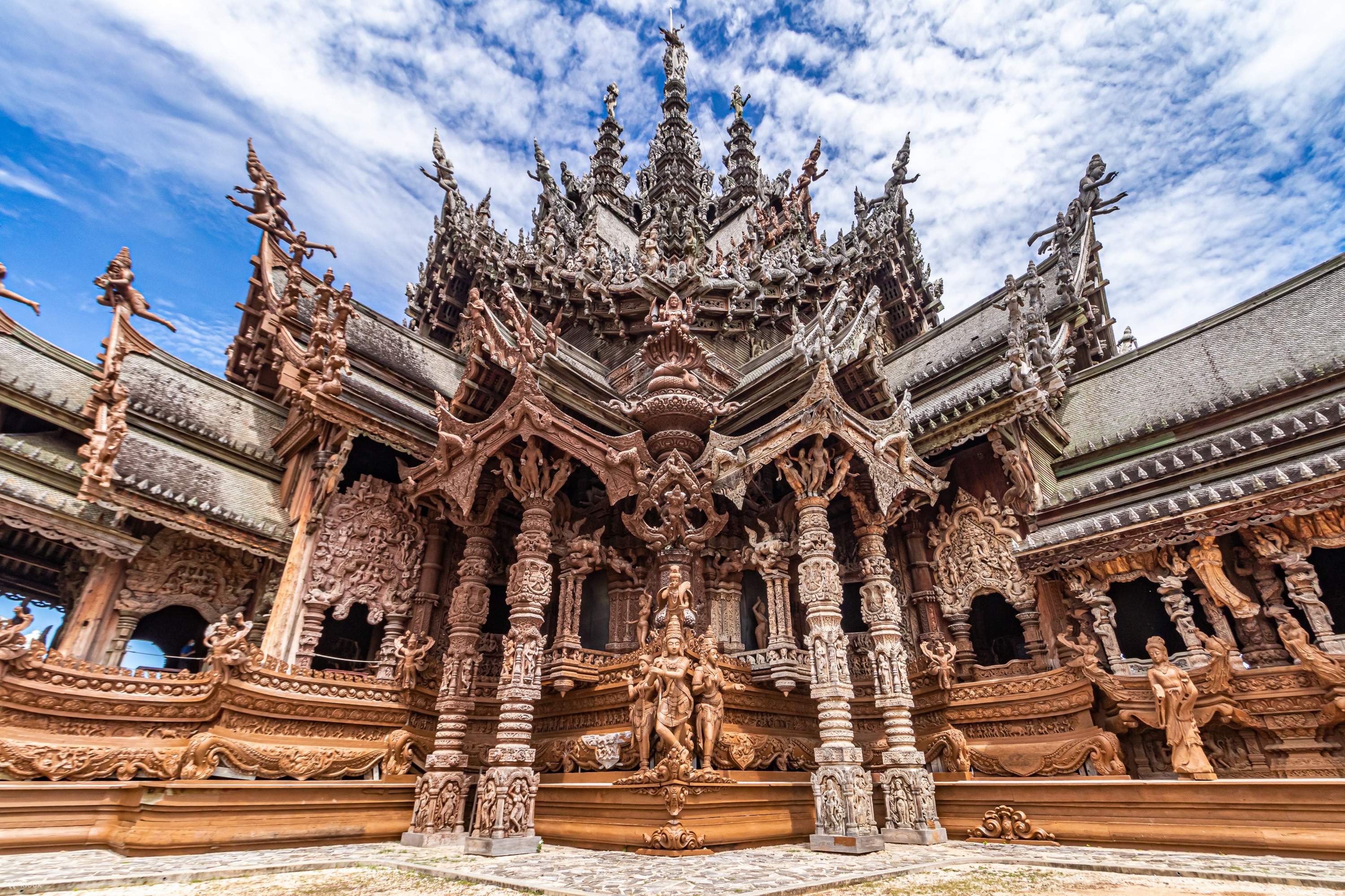
For those wishing to explore Thai woodcarving firsthand, there are a few key locations you shouldn’t miss.
The Sanctuary of Truth in Pattaya: This massive wooden structure, built without nails, is a testament to Thai woodcarving’s enduring legacy. It features carvings that represent human aspirations and philosophies, a place where the sacred and secular meet in a visual feast of craftsmanship.
Wat Pho in Bangkok: Known for its reclining Buddha, Wat Pho also has elaborately carved doors and windows that depict mythological scenes and protect the temple’s inner sanctum.
Chiang Mai Temples: Temples like Wat Phra Singh and Wat Chedi Luang in Chiang Mai are superb examples of Lanna woodcarving. Their intricate designs, rich with natural motifs, reflect the northern Thai respect for the natural world and its divine connections.
Modern Sustainability and Legacy

Thai woodcarving has gained global recognition and has become a prominent feature in contemporary home decor. However, as this art form evolves, sustainability remains a top priority for artisans. Many craftsmen now utilize reclaimed wood, a practice that preserves the craft’s rich heritage while respecting and protecting natural resources.
Yet, the true challenge lies in preserving the intangible legacy of Thai woodcarving. As younger generations show diminishing interest in traditional crafts, there is an urgent need to ensure that these skills and cultural stories are passed down. Initiatives to train young artisans and raise awareness about the cultural significance of woodcarving play a crucial role in keeping this ancient art alive.
Closing Thought
Thai woodcarving is not only a legacy of craftsmanship but also a bridge to understanding the country’s heritage and spirituality. Each piece reflects the skill and dedication of its creator, engaging both art lovers and those seeking to connect with Thai culture and values. Preserving this tradition safeguards a cultural treasure for future generations, allowing us to appreciate and engage with Thailand’s rich artistic legacy.
Similar read: