

Share This Article
Mount Meru, an enigmatic and sacred peak, has stood as the axis of the universe in Hindu, Buddhist, and Jain cosmology for millennia. It is more than just a mythological mountain—it symbolises cosmic balance, spiritual enlightenment, and divine governance. This legendary peak is often depicted as the centre of all physical, metaphysical, and spiritual realms, extending its influence across multiple cultures and traditions. But what makes Mount Meru so significant? Why does this mythological peak continue to captivate believers, philosophers, and scholars alike?
The Origins of Mount Meru in Hindu Cosmology
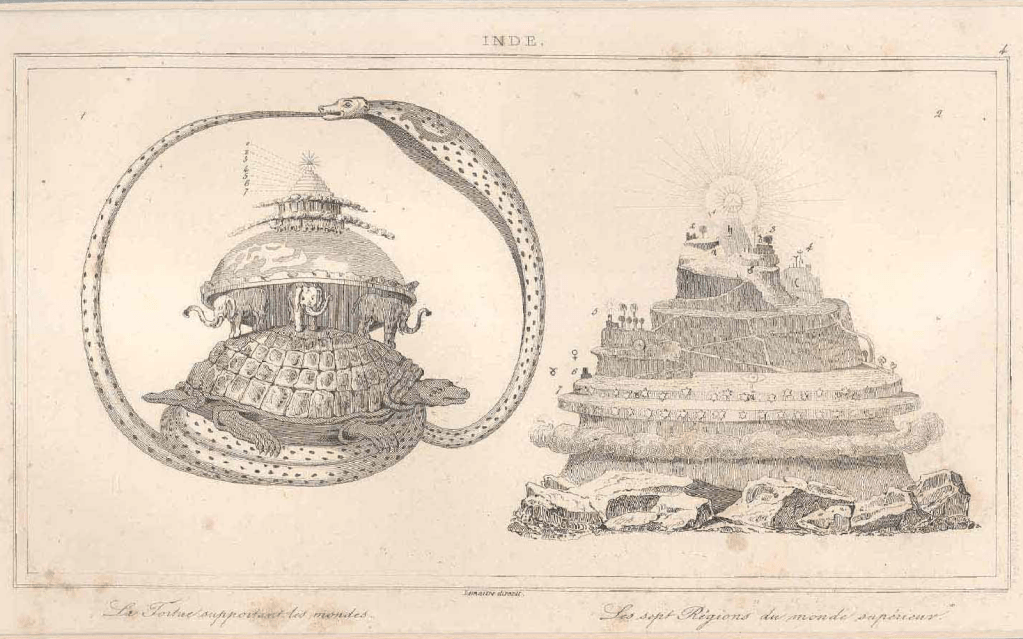

In Hinduism, Mount Meru is described as the centre of the universe, home to the gods and the celestial beings of Svarga (heaven). According to Hindu scriptures such as the Puranas and the Mahabharata, Meru is a golden mountain surrounded by seven concentric rings of oceans and continents. It is believed to be the dwelling of Lord Brahma, the creator god, and a resting place for Indra, the king of the gods.
Meru is often illustrated as the axis mundi—the cosmic axis connecting heaven, earth, and the underworld. The peak represents divine authority and stability, reinforcing Hinduism’s cyclic concept of time and space. Devotional texts depict Meru as a towering mountain, shimmering with gold, silver, and gemstones, reinforcing its sacred stature as a realm beyond human reach.
Mount Meru in Buddhist Tradition

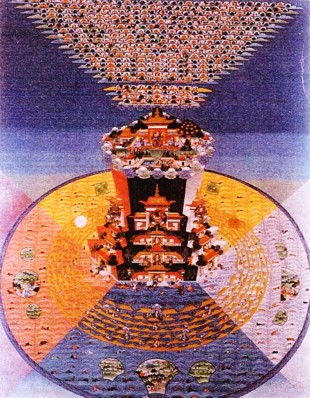
Buddhism inherited the concept of Mount Meru but gave it a unique interpretation. According to Buddhist cosmology, Meru is at the centre of the Buddhist universe, surrounded by four great continents, including Jambudvipa, where humans reside. At the summit of Mount Meru lies the heavenly abode of Tavatimsa, ruled by the deity Śakra (Indra in Hinduism).
Theravāda, Mahāyāna, and Vajrayāna Buddhist traditions each incorporate Meru into their teachings. In some representations, Mount Meru symbolises the mind’s journey toward enlightenment, while in others, it is a geographical centre that governs all cosmic forces. The Buddhist vision of Mount Meru also places heavy emphasis on karma and dharma, reinforcing the mountain’s role as a cosmic equilibrium that maintains order.
Jain Perspective on Mount Meru

Jainism, another ancient religion of India, also reveres Mount Meru. In Jain cosmology, it stands at the centre of the middle world, where mortal beings reside. Jains believe that the mountain is surrounded by two and a half continents and is the site where the first Jain Tirthankara, Rishabhanatha, attained enlightenment.
Unlike Hindu and Buddhist traditions, which associate Mount Meru with deities and celestial beings, Jainism focuses on Meru as a place of spiritual attainment. The mountain is symbolic of the path to liberation (moksha), where the righteous can transcend the cycle of rebirth and suffering.
Myth or Reality? Mount Meru’s Possible Geographical Counterparts

Despite its mythological grandeur, scholars and historians have long speculated about the real-world location of Mount Meru. Some believe it corresponds to the Pamir Mountains in Central Asia, while others suggest it aligns with Mount Kailash in Tibet, a sacred site in Hinduism, Buddhism, and Jainism.
Mount Kailash bears remarkable similarities to the mythical Meru—it is revered as a divine seat of power and remains largely unexplored due to its spiritual significance. Others argue that Mount Meru is a metaphorical construct rather than a physical location, representing the pursuit of divine wisdom and balance in the universe.
Meru’s Influence on Architecture and Culture
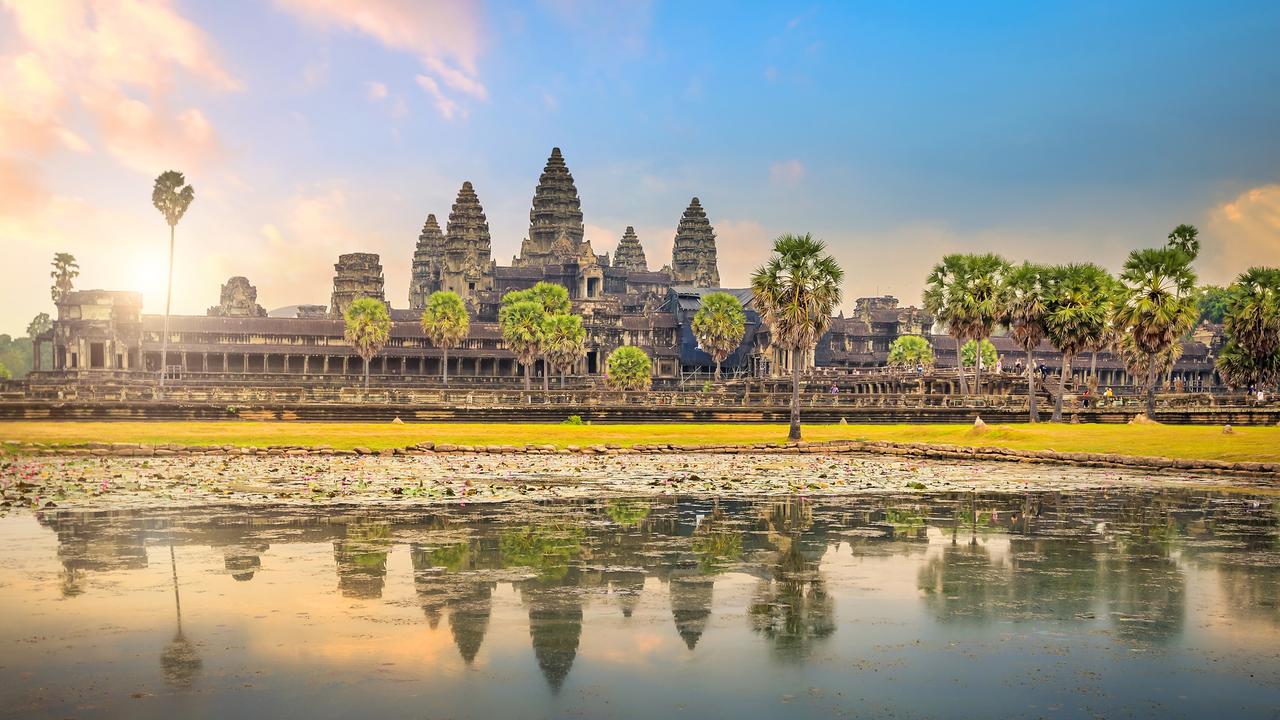
The symbolism of Mount Meru has transcended scriptures and found expression in architectural marvels across Asia. Temples and stupas in India, Thailand, Cambodia, and Indonesia have been designed to emulate the mountain’s divine structure. The Angkor Wat temple complex in Cambodia, for example, is a stunning representation of Mount Meru, with its five towers symbolising the mountain’s peaks.
Similarly, Borobudur in Indonesia and Wat Arun in Thailand reflect the influence of Meru in their tiered structures, signifying spiritual ascent. These architectural designs reinforce the notion that Mount Meru is not just a mystical peak but an enduring symbol of divine harmony and cosmic order.
Mount Meru in Contemporary Beliefs and Spiritual Practices
Even in modern times, Mount Meru’s legend continues to shape spiritual practices. Many Hindu and Buddhist rituals reference Meru as the centre of divine power, with devotees making pilgrimages to locations associated with it, such as Mount Kailash. The mountain remains an aspirational symbol for yogis, monks, and spiritual seekers striving for enlightenment.
Additionally, Meru has made its way into popular culture, literature, and even New Age spiritual movements. Some meditation techniques incorporate the concept of ascending Mount Meru as a metaphor for deepening one’s consciousness. Meanwhile, conspiracy theories and esoteric interpretations continue to explore the possibility of Meru as a lost civilisation or an interdimensional gateway.
Why Mount Meru Still Matters
The mythology of Mount Meru is more than an ancient tale; it is a foundational pillar of spiritual thought across multiple traditions. Whether as the golden mountain of Hindu gods, the cosmic centre of Buddhist cosmology, or the spiritual gateway in Jain philosophy, Meru continues to inspire awe and devotion.
Its influence extends beyond religion, shaping art, architecture, and cultural identity throughout Asia. Whether it is a physical mountain or a symbolic representation of a spiritual ascent, the legend of Mount Meru endures as a testament to humanity’s eternal quest for divine connection and universal harmony.
Similar read:
- Folklore and Mythology: 7 Stories That Shaped Thai Culture
- Hanuman in Thailand: The Monkey God’s Legacy in Art and Dance
- Unseen Influences: How Hinduism Shaped Thai Cultural Beliefs
Sources:
[1] Mount Meru in the Buddhist Faith
[2] Mount Meru
[3] Mount Meru – Hell and Paradise on One Mountain
[4] What is Mount Meru?