

Share This Article
Thailand is a country with a diverse and intricate cultural mosaic. Each region has its own unique traditions, languages, and lifestyles, which is especially true for ethnic communities in Thailand. For travelers who want to explore the diversity of Thai culture, visiting these communities offers an opportunity to experience a slower pace of life that is steeped in age-old traditions.
Journey with us as we uncover the cultural treasures hidden in Thailand’s diverse ethnic landscape.
1. Moken: The Sea Gypsies of Phang Nga
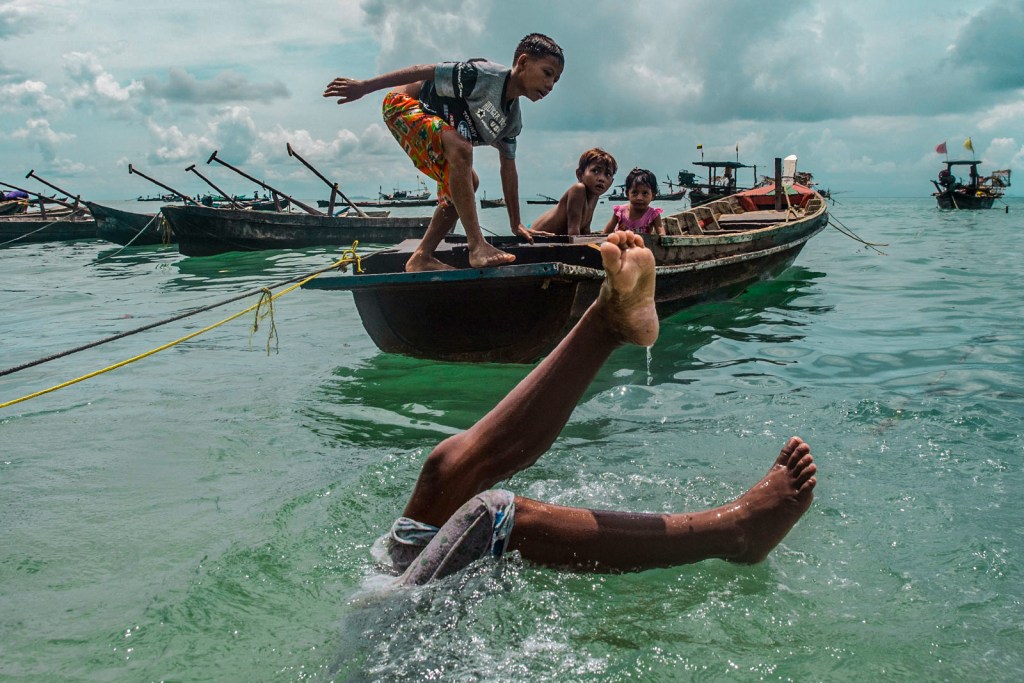
The Moken, known for their seafaring culture, inhabit regions such as the Koh Surin National Park in Phang Nga Province. Moken mythology speaks of their name deriving from ‘Lamo,’ meaning to drown, and ‘Gan,’ a figure from the coastal ruling queen’s lore. Their lifestyle is intimately tied to the sea, using boats as living spaces and adhering to the monsoonal rhythms. While some have transitioned to permanent settlements, others continue their ancestral nomadic life. The Mokens have rich spiritual beliefs and rituals, honor ancestral spirits, and possess a deep knowledge of herbal medicine and boat-building. Their linguistic heritage includes Moken, Yawi, and Thai languages, reflecting a diverse cultural identity.
Recognizing the importance of interactions with tourists to secure a sustainable future for their people, the Moken community of Koh Surin formed the Moken Tourism Team to offer high-quality tours and activities. You can have respectful walks through their homes, observe their society, and exchange cultures, all with helpful local guides.
2. Pakakeyaw Karen: The Elephant Caretakers of Mae Chaem
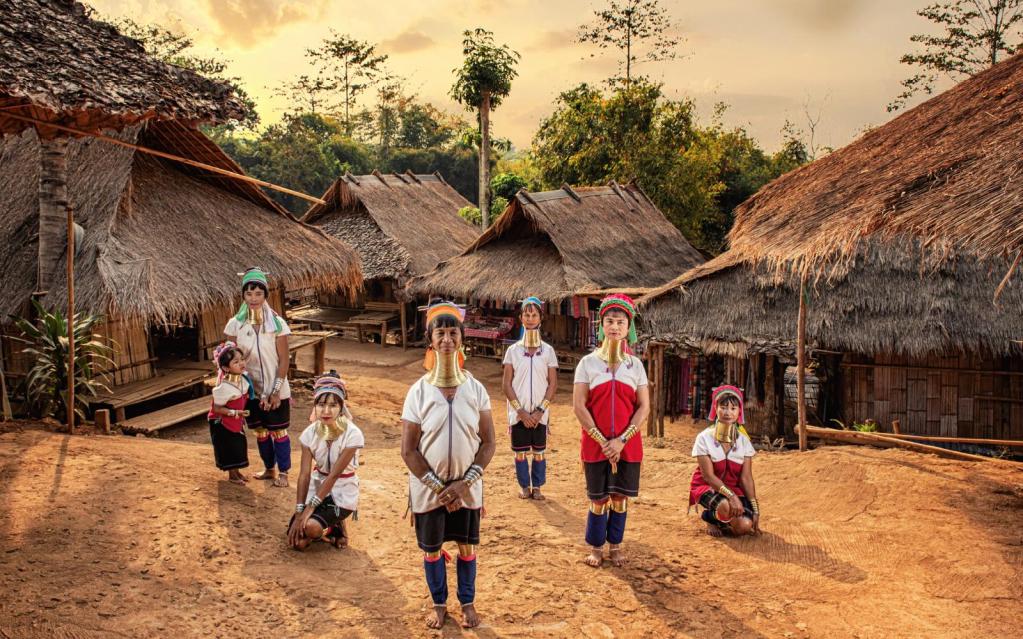
In the serene Mae Chaem District of Chiang Mai, the Karen community, also known as Pakakeyaw, cherishes their rich traditions. Known for their belief in spirits residing in nature, they have harmoniously blended these ancient beliefs with Buddhism. The Pakakeyaw people are recognized for their colorful hand-woven clothing and brass neck rings, which make them stand out amongst other Karen communities. For over a century, elephant rearing has been an integral part of their culture, which symbolizes the deep bond between the Karen people and these majestic creatures.
When you visit the Pakakeyaw village, you can participate in elephant treks, which offer unique insights into the ways of life of both the elephants and the community. You will also get to experience their distinctive culinary practices and rituals.
3. Akha: The Hillside Farmers of Hloyo Village

Located in Chiang Rai Province on Doi Mae Salong, Hloyo village is an entirely Akha ethnic community. The village is home to around 300 people who are primarily engaged in gardening and cultivating crops such as lychee, cherries, coffee, and rice. Over the last decade, efforts to boost community tourism have transformed the village into an attractive homestay destination while striving to enhance its livability. The Akha, believed to have migrated from China, have historically migrated through Myanmar to settle in high-altitude regions across Asia, including Thailand, preserving their traditional lifestyle, which emphasizes hard work in agriculture over domestic life.
Visiting Hloyo village will be an unforgettable experience. You will get to try the traditional Akha dishes such as Aloo curry and Akha chili paste. You can also explore local handicrafts, traditional farming practices, and the surrounding natural forest, which offers a rich cultural experience.
4. Peranakans: The Nonya Food Artisans of Phuket
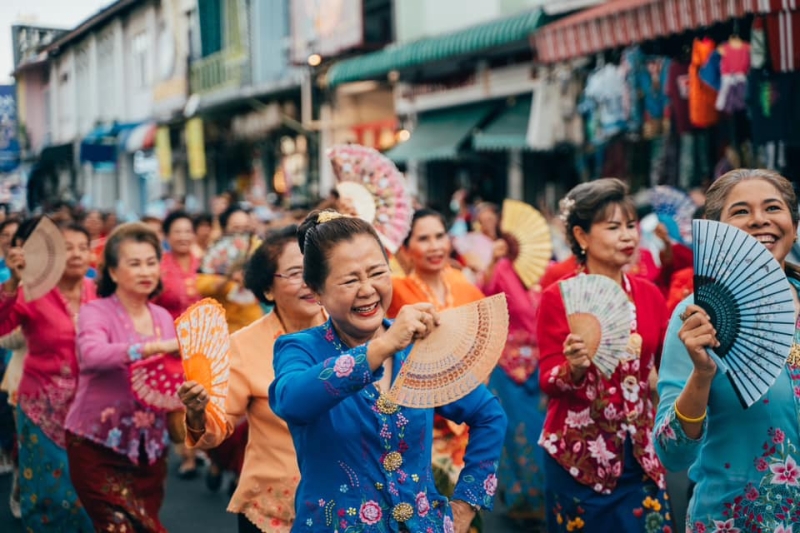

Phuket is renowned not just for its stunning beaches but also for its vibrant Peranakan culture. This ethnic group, a blend of Chinese Hokkien and Malay heritage, emerged when Chinese settlers arrived in the Malay region in the early 15th century. Those unfamiliar with ‘Peranakans’ might recognize the term ‘Baba Nyonya,’ which refers to the descendants of Chinese and Malay unions.
Peranakans have preserved their distinct culture, particularly in their unique Sino-Portuguese architecture—a fusion of Western structural design and Chinese decorative elements featuring auspicious motifs and intricate tile work. They are also famous for their delicious cuisine, also known as Nonya food. This unique blend combines Chinese cooking techniques with Malay and Indonesian flavors, resulting in dishes like babi pongteh (braised pork with fermented bean paste), ayam buah keluak (chicken stewed in a tamarind gravy), and kueh (sweet pastries). So, as you plan your visit to Phuket Old Town, not only will you see charming architecture, but you will also get to taste one-of-a-kind cuisine.
5. Tai Dam: The Skilled Weavers of Loei
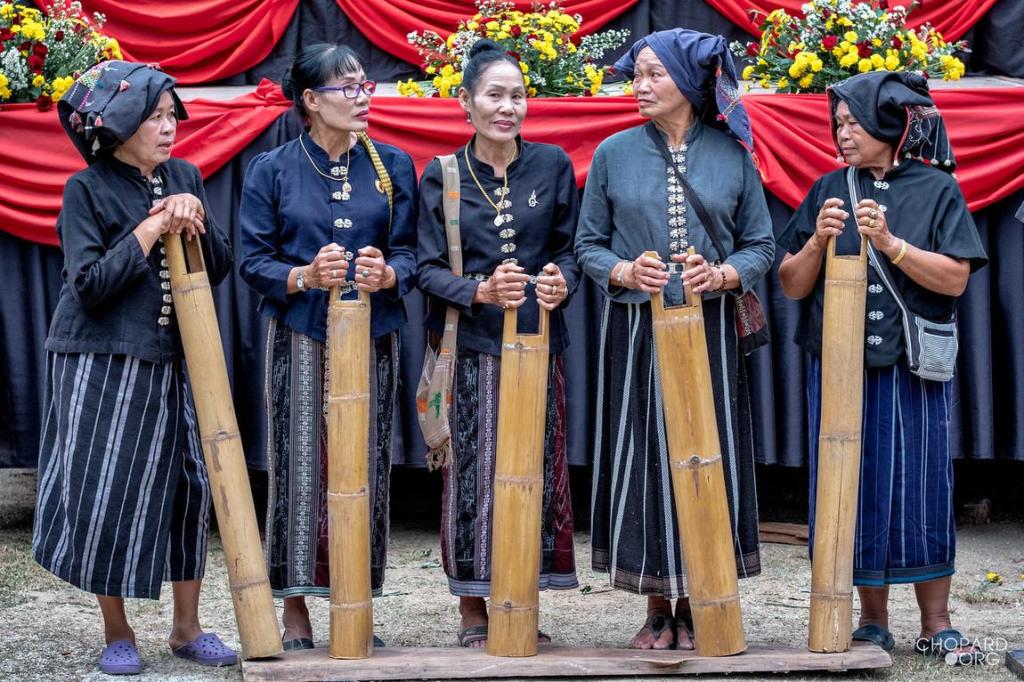
The Tai Dam, originating from the Sipsong Chutai region (now Dien Bien Phu, Vietnam), migrated to Thailand in various groups due to warfare, with a notable settlement in Ban Na Pa Nad, Loei Province.
Tai Dam people are known for their skilled weaving, spiritual beliefs, black clothing, and warm hospitality. Their textiles, particularly “Sin Nang Han” cloth, are highly valued for their intricate patterns, vibrant colors, and symbolic meaning. This cloth is a representation of their cultural heritage and signifies protection and unity within the community.
Nowadays, you can learn about the Tai Dam people’s way of life, culture, and traditions at the “Tai Dam Cultural Village” located in Ban Na Pa Nad, Village No. 4.
Let the ethnic tapestry of Thailand unfold
Traveling through Thailand’s ethnic communities is more than a trip—it’s an enlightening journey that connects us to the heartbeat of human diversity. Each community, from the sea gypsies of Phang Nga to the Peranakan of Phuket, offers a unique cultural imprint that enriches Thailand’s identity. As we navigate through their traditions, crafts, and stories, we don’t just discover new cultures; we also rediscover our shared humanity.
Sources: Post Today, RenownTravel, Moken Islands, Thailand Tourism Directory