

Share This Article
Thailand is often praised for its relatively open attitudes toward gender and sexual diversity. Unlike many Western nations that operate within a rigid binary framework, Thailand acknowledges a spectrum of gender identities, reflected in its unique and evolving linguistic landscape. The country has historically been a sanctuary for gender diversity, offering recognition to identities that transcend the male-female dichotomy. With at least 18 recognised gender identities, Thailand’s rich vocabulary of gender terminologies reflects its complex, fluid, and often paradoxical relationship with gender expression.
But how did Thailand develop such an intricate lexicon of gender identities? What do these terminologies reveal about Thai society’s evolving attitudes toward gender and sexuality? And how does this linguistic recognition compare to actual legal and social rights? This article explores Thailand’s unique gender terminologies, cultural significance, and the ongoing struggles for recognition and equality.
A Language of Inclusion: Thailand’s Expanding Gender Lexicon
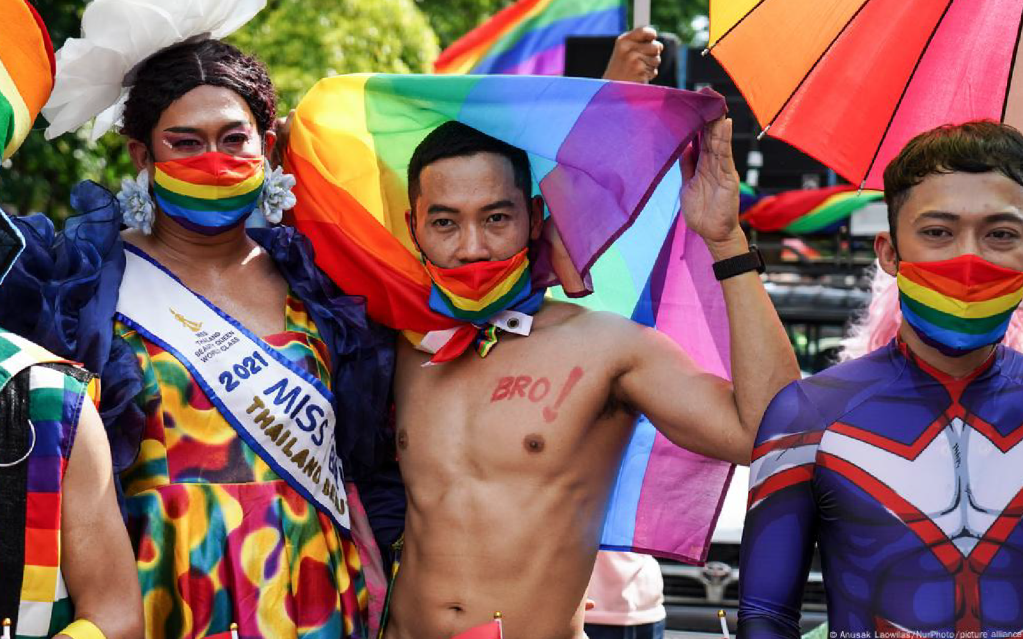
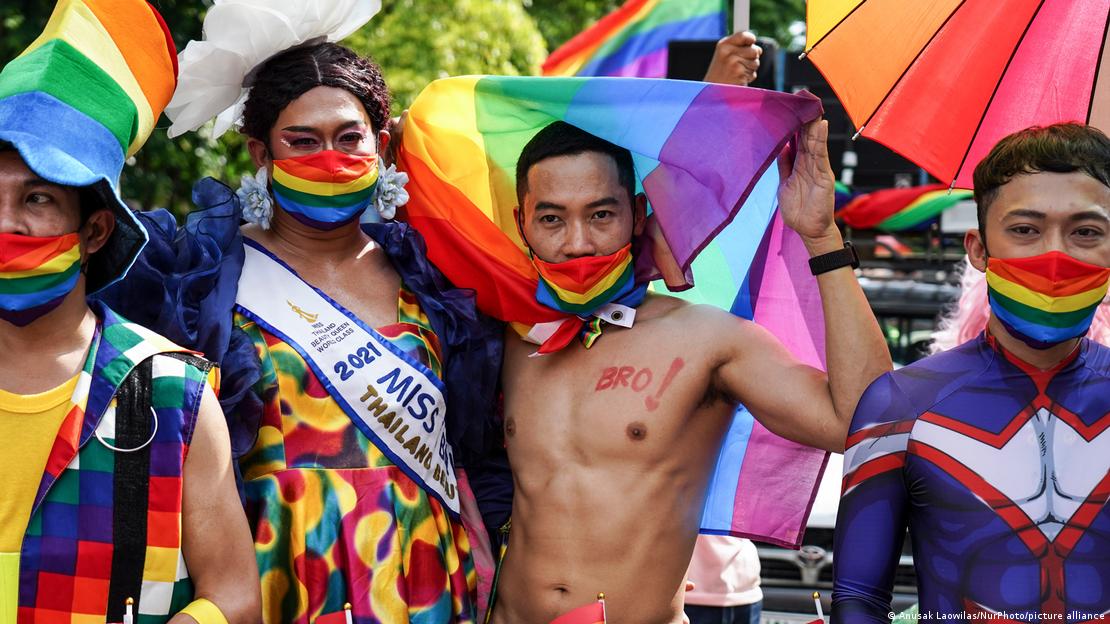
Thai society has long recognised gender diversity, evident in its array of terms used to describe individuals who do not conform to traditional gender roles. While English-speaking cultures often struggle to accommodate non-binary identities, Thailand’s linguistic flexibility allows for a more nuanced expression of gender.
1. Kathoey (กะเทย) – One of the most well-known Thai gender identities, kathoey is often translated as “ladyboy” in English. It refers to transgender women or effeminate men, though the term itself has complex cultural connotations. Kathoey individuals are highly visible in Thai society, particularly in the entertainment and beauty industries, yet they still face significant legal and societal discrimination.
2. Tom (ทอม) and Dee (ดี้) – These terms originate from English words but have taken on distinct meanings in Thailand. Tom refers to a masculine-presenting woman, often likened to a “butch” lesbian, while Dee describes a more traditionally feminine woman who is attracted to Toms. This terminology is prevalent within Thai lesbian communities, offering a structured way to navigate same-sex relationships.
3. Phu Ying (ผู้หญิง) and Phu Chai (ผู้ชาย) – These are the standard Thai words for “woman” and “man,” respectively. However, within LGBTQ+ circles, their use can be more fluid, allowing for personal identity to take precedence over biological sex.
4. Sao Prapphet Song (สาวประเภทสอง) – Literally translating to “a second-type woman,” this term is sometimes used as an alternative to kathoey, although it is considered more respectful and less colloquial.
5. GMM (เกย์แมน) and GLM (เกย์เลี่ยนแมน) – These two terms are used within Thailand’s gay male community. GMM (Gay Masculine Man) refers to masculine gay men, while GLM (Gay Lean Man) describes men who are more androgynous or effeminate.
6. Bise (ไบ) – Derived from “bisexual,” Bise is commonly used in urban LGBTQ+ spaces to describe individuals attracted to more than one gender.
7. Non-binary and Genderfluid Terms – While Thailand does not have a direct equivalent for “non-binary” in the way Western societies do, various terms exist to describe gender-fluid individuals, such as Phu Chai Phu Ying (a person who identifies with both masculine and feminine traits) or Ying Rak Ying (women who love women, but may not conform to Tom and Dee distinctions).
These terminologies illustrate the flexibility of gender in Thai culture, where linguistic recognition of diverse identities is more advanced than in many other countries. However, linguistic acceptance does not always translate into legal protection.
Cultural Recognition vs. Legal Challenges

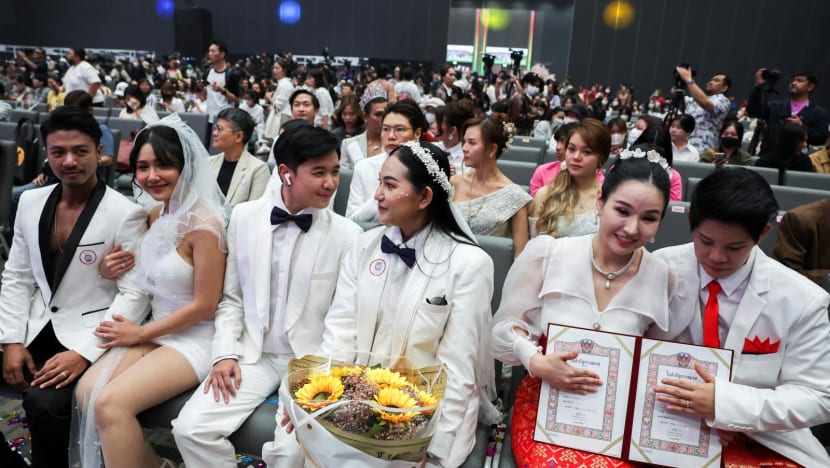
Despite Thailand’s rich gender lexicon, the country has yet to enshrine full legal rights for many gender-diverse individuals. Transgender individuals, for example, cannot legally change their gender on identification documents, making everyday activities—such as opening bank accounts or travelling—more difficult. Many kathoey individuals still face workplace discrimination, and societal expectations often relegate them to specific industries like beauty, entertainment, and sex work.
However, Thailand has made significant progress in LGBTQ+ rights with the legalisation of same-sex marriage. This landmark achievement marks a major step forward in recognising the rights of gender-diverse individuals, allowing same-sex couples the same legal protections and recognition as their heterosexual counterparts. While this progress is commendable, challenges remain in ensuring full equality, particularly in areas such as legal gender recognition for transgender individuals.
The disparity between cultural acceptance and legal recognition highlights a paradox within Thai society: while gender diversity is visible and widely acknowledged, systemic protections for certain gender identities still lag behind.
How Gender Terminology Shapes Identity
The language we use shapes our understanding of ourselves and the world around us. For many gender-diverse individuals in Thailand, having specific terms to describe their identities fosters a sense of belonging and validation. Unlike in many Western countries, where individuals often struggle to find terminology that fits, Thai society provides an extensive vocabulary to articulate gender identity.
However, linguistic categorisation also has its limitations. Some argue that while these terms provide visibility, they can also reinforce rigid identity categories, making it difficult for individuals who do not fit neatly into existing labels. The rise of Western-influenced gender concepts, such as non-binary and genderqueer identities, has further complicated traditional Thai gender classifications, leading to a generational shift in how young LGBTQ+ individuals define themselves.
The Influence of Buddhism on Gender Perception
Thailand’s predominant religion, Theravāda Buddhism, plays a significant role in shaping gender norms and identities. Buddhist teachings acknowledge the existence of kathoey but often frame their existence through the concept of karma—the idea that being transgender or non-conforming is a result of past-life actions. While this belief does not necessarily promote discrimination, it sometimes fosters the perception that transgender individuals are living out karmic consequences rather than being seen as equal members of society.
Monastic life also reflects this gendered structure. While men can become monks (bhikkhus), women who wish to take on a monastic role face greater restrictions. Additionally, transgender individuals often find themselves excluded from traditional Buddhist ordination, reinforcing gender hierarchies within religious spaces.
A Global Perspective: How Thailand Compares
Thailand’s linguistic recognition of diverse gender identities is far more advanced than in many Western countries, where legal frameworks often struggle to accommodate non-binary individuals. However, nations like Canada and Germany have taken steps to introduce gender-neutral identification documents, an area where Thailand still lags.
On the other hand, many Asian nations, including China and Malaysia, still criminalise certain expressions of gender non-conformity, making Thailand a relative haven for LGBTQ+ individuals. The visibility of kathoey, Toms, and other gender-diverse individuals in Thai media further contributes to a more open, albeit imperfect, social landscape.
The Future of Gender Diversity in Thailand
As younger generations become more exposed to global gender discourse, Thailand’s gender landscape is evolving. Activists are pushing for greater legal rights, including gender recognition laws and broader anti-discrimination protections. Social media has also provided a platform for gender-diverse individuals to redefine traditional terminologies and introduce new ways of understanding identity.
The future of gender diversity in Thailand will depend on continued advocacy, legal reforms, and shifting societal attitudes. While linguistic recognition provides a strong foundation, true equality will only be achieved when the law catches up with cultural progress.
Similar read:
- Thailand’s Kathoey: A Cultural Legacy Beyond Gender Norms
- Thai Buddhism and Gender Fluidity: A Sacred Balance or Cultural Dissonance?
- Pride in Paradise: Celebrating LGBTQ+ Culture in Thailand
Sources:
[1] Gender identities in Thailand
[2] Glossary of Thai gender and sex terminology
[3] Thailand Has 18 Different Gender Identities